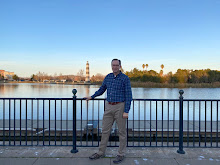
We are still in Oregon but eager to be back in Mongolia. Sunday I preached here at Westgate Baptist Church. It encouraged me that several people found me later and told me how the sermon was a blessing to them. Next Sunday we will be at Berean Baptist Church in Dallas, Oregon.
Some of you may know that my dad and I are planning to try to open a carpentry shop in Mongolia in several years. My dad is planning to come to Mongolia and teach the Mongolians carpentry skills. The plan helps me because I can get a visa through the carpentry shop and use some parts of a building for the church to meet in. One of the obstacles to be overcome is a source of inexpensive wood. Tuesday morning my dad and I visited Lumber Products, a company that is a big supplier of lumber to many carpenter shops in the Portland area. They agreed to let us look through a stack of discarded products occasionally and take what was of interest to us. Of course, we'll still have to pay to ship it to Mongolia, however the wood itself would be free or very low cost.
Things are going well in Mongolia. We had two young ladies attend our church service for the first time last Sunday. One of the young ladies is familiar to me: she has visited my house before. Buren has been attending services on Sundays, Bob has not. Also, Ganpurev's preaching on Sundays is going well. Keep praying for them and for us.
Wednesday, August 29, 2007


Tuesday, August 28, 2007
Ministering at Westgate Baptist Church
Yesterday I preached at Westgate Baptist Church, our sending church. As a preacher it is always gratifying when someone makes a special point to find me and tell me how my sermon blessed their life. Two folks yesterday came to me to tell me how the Holy Spirit had used my preaching to bless their lives. It is thrilling to be an instrument that God can use.
Westgate Baptist Church's 25th Anniversary is in two weeks (September 9). The anniversary is the main reason that we returned to the States, and so we plan to stay in Oregon until the anniversary and then return to Mongolia.
Speaking of Mongolia, I have not received an update from there in some time. Consequently, I do not know much of what is occurring there. I will try to get an update and post it to my blog this week.
Westgate Baptist Church's 25th Anniversary is in two weeks (September 9). The anniversary is the main reason that we returned to the States, and so we plan to stay in Oregon until the anniversary and then return to Mongolia.
Speaking of Mongolia, I have not received an update from there in some time. Consequently, I do not know much of what is occurring there. I will try to get an update and post it to my blog this week.
Thursday, August 23, 2007
Update
We are still in Oregon for a few more weeks. We have meetings and speaking engagements every week from now until we leave.
The news that we have been hearing from Mongolia is sparse. It seems as if attendance has been flat which is better than hearing that attendance is plummeting.
I have made a couple of calls to Mongolia. Between my Mongolian and the telephone connection, it has seemed difficult to understand and make myself understood. I am eager to get back to Mongolia and continue my ministry there face to face.
The news that we have been hearing from Mongolia is sparse. It seems as if attendance has been flat which is better than hearing that attendance is plummeting.
I have made a couple of calls to Mongolia. Between my Mongolian and the telephone connection, it has seemed difficult to understand and make myself understood. I am eager to get back to Mongolia and continue my ministry there face to face.
Wednesday, August 15, 2007
Investing in the future
"Invest your life in something that will outlive you – PEOPLE!" – Ron Brooks
"The greatest use of life is to spend it for something that will outlast it." – William James
"He is no fool who gives what he cannot keep to gain what he cannot lose." – Jim Elliot
These three quotes all share a similar idea: there is a way to invest in the future that always yields good returns. Many Americans seem to be very eager to find the highest return for their money. Stocks, mutual funds, bonds - all these tempt Americans with talk of high returns. Then there are the get-rich-quick schemes that threaten to inundate people's e-mail boxes. Yes, too many Americans are obsessed with finding an investment that will allow them to get rich while doing very little.But there is a better way to invest. It is a venture that promises good returns. It is people. The people whom we lead to our Savior will be eternally grateful for our witness. The people whom we disciple will ultimately disciple others who will ultimately disciple others until the returns in eternity are beyond our comprehension.
Besides, what could be more important than people. We know that our gold will perish, our buildings will eventually collapse, our clothing will wear out, and one day all those things will seem so unimportant. But people - this is one of the few things that will continue on into eternity. What better way to invest our lives!
Monday, August 06, 2007
Prayer update
I have not been updating my blog as much because we have been traveling.
I sent out the good word about Tsendee's salvation last week. Because I have not heard more, I have nothing new to report. Please continue to pray that he would grow in grace and in the knowledge of our Lord and Savior. I have heard that attendance has been down at the church services in Mongolia - mainly people traveling, I would guess.
My family will be traveling to Eastern Oregon and Idaho this week to see some family. Next Sunday we will be in a supporting church in Northern Idaho. There is quite a bit of traveling in front of us this week. I counted them up and believe that I will have the opportunity to preach another eight or ten times in the next month before we return to Mongolia. Pray for us.
I sent out the good word about Tsendee's salvation last week. Because I have not heard more, I have nothing new to report. Please continue to pray that he would grow in grace and in the knowledge of our Lord and Savior. I have heard that attendance has been down at the church services in Mongolia - mainly people traveling, I would guess.
My family will be traveling to Eastern Oregon and Idaho this week to see some family. Next Sunday we will be in a supporting church in Northern Idaho. There is quite a bit of traveling in front of us this week. I counted them up and believe that I will have the opportunity to preach another eight or ten times in the next month before we return to Mongolia. Pray for us.
Wednesday, August 01, 2007
Praise the Lord!
It has been some time since I posted an update. We have been camping. Two weeks ago we were at Westgate Baptist Church's Family Camp where I was the featured speaker. Last week we were at the Dean Family Annual Fishing Camp on the Kenai River in Alaska. Next week, we will be at the Jaquith Family Annual Camp in eastern Oregon. Wow! That is a lot of camping. But it is not the camping as much as the time with family that we are cherishing. Last week was the first time that our children were united with all their cousins on the Dean side of the family.
I have heard good news from Mongolia: Tsendee who is Bayambaa's father has become a Christian! He has rejected all other gods, recognized that the God of the Bible is the one true God, accepted that Jesus Christ is His Son, and believed that Jesus Christ's death, burial, and resurrection paid the penalty for his personal sin. That is the report that I received this past week from my colleague in Mongolia, Roland Gay. I have been personally witnessing to Tsendee and praying for his salvation specifically for some months now. So his repentance is significant to me personally. Continue to pray for his son-in-law Mandaa to repent and believe in Jesus Christ as his Savior.
I have heard good news from Mongolia: Tsendee who is Bayambaa's father has become a Christian! He has rejected all other gods, recognized that the God of the Bible is the one true God, accepted that Jesus Christ is His Son, and believed that Jesus Christ's death, burial, and resurrection paid the penalty for his personal sin. That is the report that I received this past week from my colleague in Mongolia, Roland Gay. I have been personally witnessing to Tsendee and praying for his salvation specifically for some months now. So his repentance is significant to me personally. Continue to pray for his son-in-law Mandaa to repent and believe in Jesus Christ as his Savior.
Sunday, July 22, 2007
Ministering in Oregon
Maybe my blog should "Ministering in Oregon." I just finished being the camp speaker at Westgate Baptist Church's Family Camp. The whole family enjoyed being there especially since both sets of grandparents were also in attendance.
We'll be in the U.S. until mid-September with several other speaking engagements and spending some time with family.
We'll be in the U.S. until mid-September with several other speaking engagements and spending some time with family.
Friday, July 13, 2007
Driving Me Crazy: Mongolian Motorists
Mongolians say that they drive cars like they ride horses. If you have ever seen a Mongolian ride a horse, then you understand that it is an apt and scary parallel.
More and more cars are coming to
Today things are different. Taxis are ubiquitous and sometimes passing motorists will pick up a foreigner holding out his hand simply to practice their English with him.
But the drivers are also different. As more and more cars crowd the roads, most drivers are being pushed towards one of two extremes. There are drivers who look at the cars, buses, pedestrians, road construction and – seemingly paralyzed by fear – decide to drive about ten miles an hour everywhere they go. The other set of drivers look at the same set of cars, buses, pedestrians, and road construction and decide that the best option is the drive like maniacs, honking their horns and swerving in and out of their lane.
Actually, in Mongolia the term “lane” is not used. I remember discussing with my Mongolian friends what to call the space between white dotted lines marked on the road. None of them could agree on what that term might be. I have since found out why: Mongolians are nearly oblivious to the lane markings. Anytime you see a car ahead signaling to change lanes, you can almost guarantee that the car is driven by a foreigner; Mongolians simply drift from lane to lane without warning. In places where two lanes are marked, three lines of traffic (and occasionally four lanes, making use of the shoulder) often form; or conversely, in places where there are two lanes and no shoulder there may be one car whose driver is doing his best to occupy both lanes. Of course, such a situation never stops the maniacal drivers from taking any opportunity to drive on the wrong side of the road or driving on a soft, gravel shoulder to pass.
Turning left into traffic can be a real unnerving experience in
Then there are intersections with traffic lights. A red traffic light in Mongolia does not mean stop, a yellow does not mean that a red light is about to follow, and a green light does not mean go. Take yellow as an example. In
In reality red and green lights only tell you who has the right-of-way. Mongolians will pass through an intersection whether the light is red or green. A red light means that you had better be really sure that no one else is preparing to enter the intersection: a green light means that you are allowed to honk at someone preparing to enter the intersection that threatens to block your way. See, once you figure out what the yellow lights mean, the green and red lights are a piece of cake.
After a while, one gets used to the traffic and actually begins to understand the thinking. A driver just has to imagine that he is riding a horse not driving a car.
I have been driving for several years now in
Tuesday, July 10, 2007
Naadam
Tuesday - we are right on the edge of Naadam. You can always tell when a big holiday is about to begin because the banks are packed with people making transactions and the stores are packed with people buying liquor. The sad truth is that Mongolians will use almost any excuse to buy and consume alcohol.
Naadam is a mid-summer holiday. After the Mongolian Lunar New Year (a.k.a. "White Month" or Tsagaan Sar), Naadam is the biggest holiday of the year. I am having trouble deciding if Naadam is a two, three, or four day holiday. I thought that Naadam started on July 11; however, while I was out today running some last minute errands (more on that in a moment), I noticed a rather elaborate ceremony taking place in Sukhbaatar Square which is the large plaza in front of the Parliament building. Also, I understand that two of the six national horse races to celebrate Naadam are taking place today. There will be two more horse races on Wednesday (which I thought was the first day of Naadam), and the final races will be on Thursday. But I understand that many businesses will be closed from Wednesday to Friday and not re-open until Saturday (in the cases of stores, restaurants, etc.) or Monday (in the case of government offices, many businesses, etc.) So is Naadam Tuesday through Thursday or Wednesday through Friday or just Wednesday and Thursday?
Unlike the United States where holidays last one day and in which case many grocery stores, pharmacies, and such remain open, during Mongolian holidays almost everything is closed. During the Mongolian Lunar New Year and again during Naadam, this means that food markets, banks, stores, restaurants, post offices, and many other places are closed for several days. What that means for me is that almost everything important must be done today (Tuesday) even though we will not leave for the United States until Friday night. So my errands included some last minute banking, checking on a ticket irregularity, and buying some food staples.
The good thing about Mongolian holidays is that everything slows down. People take time to visit and talk with friends. There is time to be with family. You can't go to the store or the workplace. Maybe America needs more holidays where less is done.
Naadam is a mid-summer holiday. After the Mongolian Lunar New Year (a.k.a. "White Month" or Tsagaan Sar), Naadam is the biggest holiday of the year. I am having trouble deciding if Naadam is a two, three, or four day holiday. I thought that Naadam started on July 11; however, while I was out today running some last minute errands (more on that in a moment), I noticed a rather elaborate ceremony taking place in Sukhbaatar Square which is the large plaza in front of the Parliament building. Also, I understand that two of the six national horse races to celebrate Naadam are taking place today. There will be two more horse races on Wednesday (which I thought was the first day of Naadam), and the final races will be on Thursday. But I understand that many businesses will be closed from Wednesday to Friday and not re-open until Saturday (in the cases of stores, restaurants, etc.) or Monday (in the case of government offices, many businesses, etc.) So is Naadam Tuesday through Thursday or Wednesday through Friday or just Wednesday and Thursday?
Unlike the United States where holidays last one day and in which case many grocery stores, pharmacies, and such remain open, during Mongolian holidays almost everything is closed. During the Mongolian Lunar New Year and again during Naadam, this means that food markets, banks, stores, restaurants, post offices, and many other places are closed for several days. What that means for me is that almost everything important must be done today (Tuesday) even though we will not leave for the United States until Friday night. So my errands included some last minute banking, checking on a ticket irregularity, and buying some food staples.
The good thing about Mongolian holidays is that everything slows down. People take time to visit and talk with friends. There is time to be with family. You can't go to the store or the workplace. Maybe America needs more holidays where less is done.
Friday, July 06, 2007
Four obstacles to missions work in Mongolia
Recently, a fellow missionary asked me to list to biggest obstacles to me in working for Christ in Mongolia. These were my four biggest obstacles. I list them for your information.
- The lack of any Biblical background. Mongolians generally know nothing about the Bible, like who Abraham is or David. Their standards for morality are all based on man's wisdom.
- The difficulty of the language. Because of the lack of Biblical background many of the words that we use (such as sin, repentance, righteousness, god, etc.) are defined differently than the Bible defines them. Therefore, when speaking of these topics the Mongolian has different concepts in mind than the Christian. Added to this, the language belongs to a completely different language family than English and it is sometimes difficult to move concepts easily expressed in English into proper Mongolian grammar.
- The choices of previous, well-intentioned missionaries. For example, many missionaries chose to pay Mongolians to "do the work of the ministry." These Mongolians often lacked the theological training and personal character to lead churches. This resulted in a poor misunderstanding of Scripture, pride among Christian leaders, and a mercenary spirit in which Mongolians were willing to change their "beliefs" for monthly income. In a country where the average salary is less than $200/mo. some of these Christians leaders drive massively expensive, new Ford Expeditions. Another choice was made by many missionaries to de-emphasize denominational and doctrinal differences in the interest of unity. Practically, this means that anyone who now stands for something and condemns his "fellow Christian's" heresy or doctrinal deficiency is considered to be divisive.
- The general busy-ness of the Mongolian people. Many Mongolians feel that they have to work 60, 70, even 80 hours a week just to avoid poverty. And those that are making a dollar an hour or so don't make all that much for an 80 hour week. That means that people often tell me that they are too busy for God. Now often Americans are busy too. But the difference is that an American does not choose to work an 80 hours week to feed his family like some Mongolians do.
Subscribe to:
Posts (Atom)